
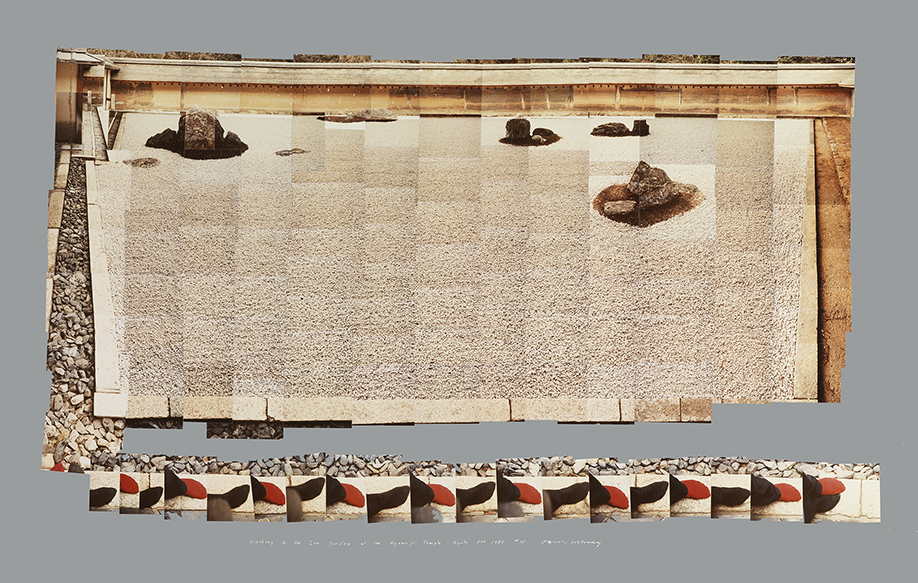
Reverse Perspective
How to be at the opposite end of perspective? Exploring potential shifts in architecture through material, movement, perception, time, and landscape
MARS3 · GENT · ENGLISH
teacher(s): Wim Goes
field of interest: Art and Architecture · Embodied (spatial) experience · Landscape · Spatial Poetics · Theory
attitude: Critical · Poetic · Reflective
method of inquiry: Fieldwork · Precedent Study · Translation
design media: Model-based · Narrative · Material-based
learning environment: Collective learning · Live Project · Cluster Studio
study trip: Mandatory
Description
Since the Renaissance, Western spatial representation has largely been governed by linear perspective: a system in which space is fixed, depth calculated, and relations predetermined. Reverse Perspective questions these conventions by exploring potential shifts in the ways space can be perceived, inhabited, and constructed.
In the former walled garden in Sohier, nature has gradually reclaimed the site. Traces of cultivation, inhabitation, and culture remain embedded within the landscape. Through an overnight stay, students are invited to slow down and attend to the changing of time and presence. These experiences become the starting point for a first spatial intervention: a fragment of a refuge on site. Rather than defining a complete space, the fragment creates a condition that invites bodily and mental engagement.
Through individual research, collective readings, and cross-disciplinary sessions with the elective ‘Art & Architecture: Reverse Perspective’, references from contemporary art, architecture, theoretical and philosophical writings become active tools within the design process.
From this interplay, the refuge unfolds through shifting relationships with the landscape, existing structures, ecology, and time. The architectural intervention is accompanied by an intermedium workpiece that extends its spatial proposition into another medium, evoking what the design might make perceptible, imaginable, or experienced.
Key questions
How can we design from the opposite end of perspective?
What if architecture invites the user to complete, transform, or reinterpret space through bodily and mental engagement?
How can we recognise elements of Reverse Perspective in contemporary art that open up alternative relations between observer, time, and space?
In what ways might architecture shift how we perceive, inhabit, and relate to an existing context?
Could a cross-disciplinary study of cultural models and references reveal alternative ways of making space, opening new grounds for intercultural dialogue?
Position statement
The studio challenges the dominance of fixed, linear perspective as a way of conceiving and making space. Through ‘Reverse Perspective’, architecture is explored as relational and shifting, inviting the user/viewer/participant to engage in its completion. Rather than imposing a predetermined spatial or conceptual order, architecture becomes embedded in ‘situatedness’ and activated through movement, time, and use.
Through research-by-making, students investigate how spatial relations can generate new forms of architectural presence within Sohier’s existing structures and landscape.
Learning outcomes
(1) The student demonstrates insight into context analysis, concept formation, problem sensitivity and engagement, ethics, and personal imagination. (2) The student is able to formulate an individual research or design strategy. (3) The student demonstrates advanced knowledge and understanding of fundamental structural principles. (4) The student is able to employ design as a mediating medium.
Expected deliverables
Written reflection · Model · Process documentation · Presentation · Architectural drawings;
Study trip
Description: A two-day, one-night study trip to the former walled garden of the castle in Sohier (Luxembourg, Belgium).
The overnight stay will take place as a camping experience within nature.
Additional cost: Approximately €20–€30, depending on transport (whether students travel by train or organise shared car rides). Accommodation: €0 as students will camp outdoors and are expected to bring their own camping equipment. (Food is not included in the estimated study trip costs)
Alternative trajectory: If participation in the planned study trip is not possible, the student may visit the site at a later stage during the semester. The student should conduct an individual site analysis, drawing on information and observations shared by their peers. This analysis should be complemented by a personal reflection on a spatial experience in a similar or comparable context.