
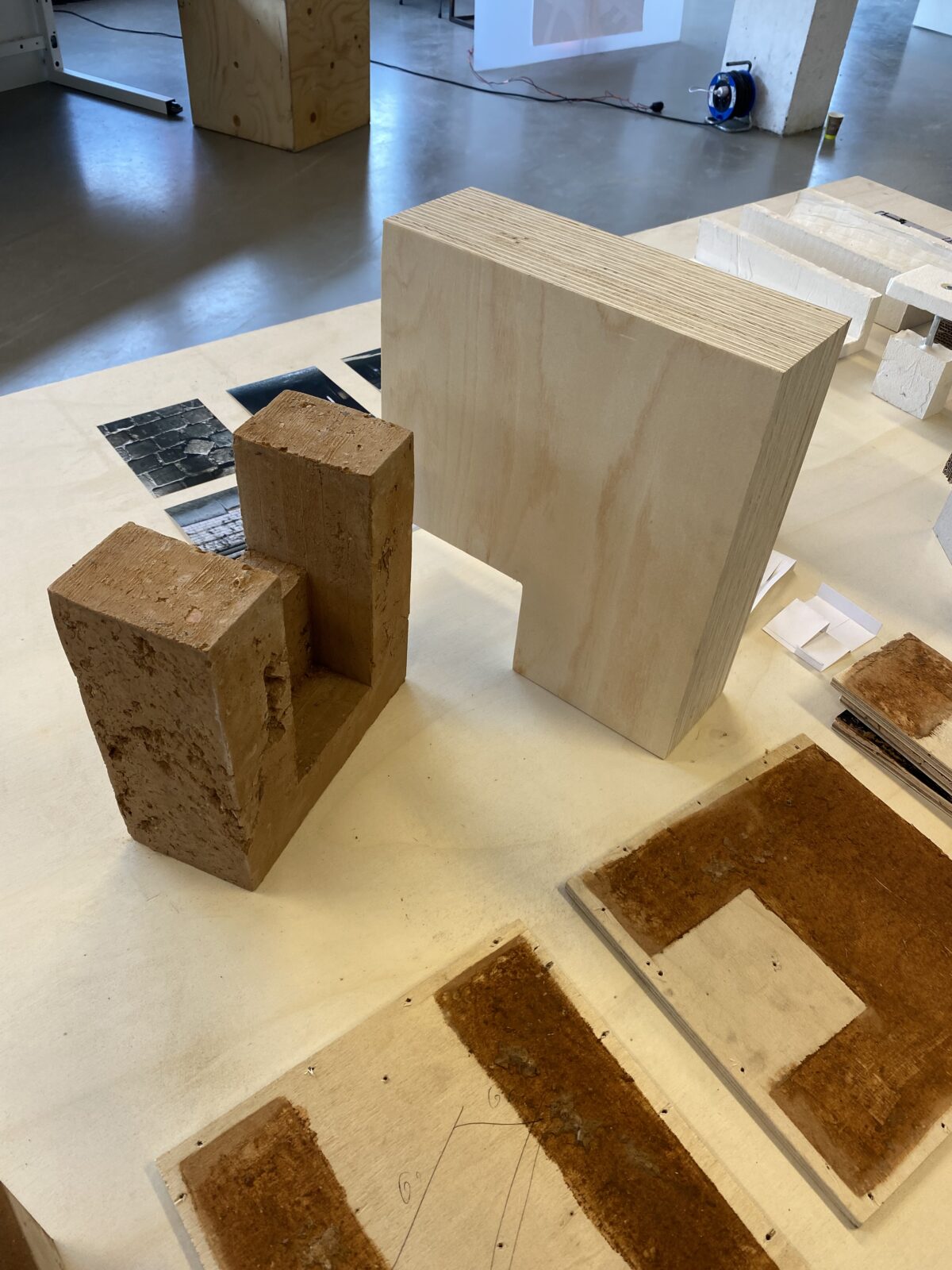
Second Trace
Exploring underground space and massivity the intervention on the site Passage Chambon focuses on what makes urban space disregarded: having undergone multiple different transformations through decades has left the passage a secondary route without intention and cohesion. Due to its hidden nature in low-lying current urban topography the site has faced decay and abandonment.
Second Trace, duplicates and reinterprets the existing integrating the forgotten passage again into the urban fabric. Carved out space alongside the passage expands the passage into a multifunctional spatial composition. A neighborhood shared space facilitating community-led care and living room is incorporated in the carved out space transforming it into a more engaging urban area from only acting as a pass-by.
By rearranging earth beneath the railway tracks the site is opened up creating new lines of sight for the passage bringing it more into focus. Interior composition originates from the use of rammed earth and the site’s materiality and topography. The extracted earth on the site is layered in variating and playful levels that habilitate connection and allow different uses.
Replacing the old wall by a new interpretation of the old columns the expanded space is conjoined with the passage. The new columns, reflecting the same division explores the conjunction of wood and earth. Both the wooden column and rammed earth footing are designed and carved to fit together in a mechanical junction creating at the same time a monolithic but also contrasting element.


MAPPING