
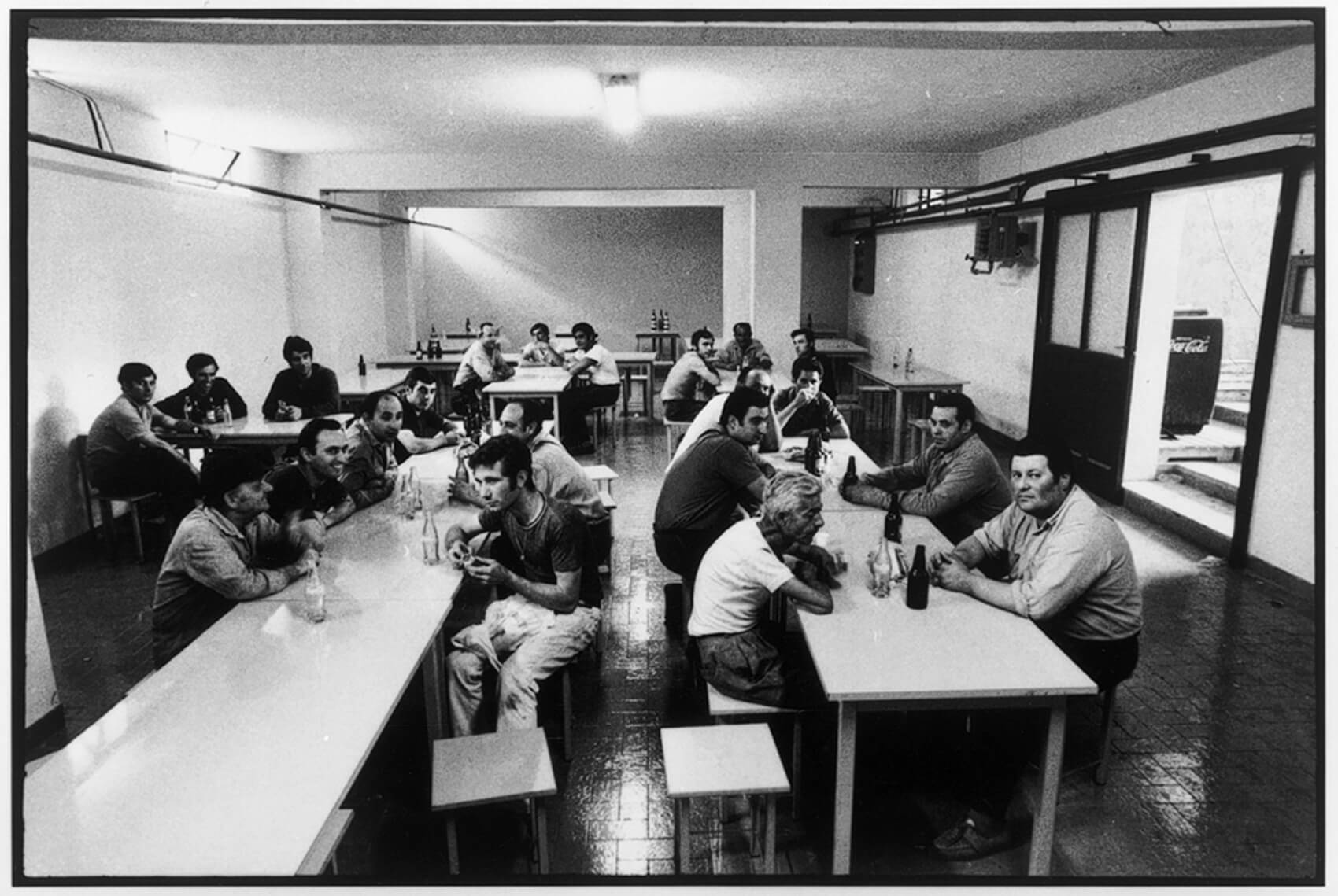
Landing (The Canteen)
The studio explores how spaces built around food can influence our approach to our environment and to each other.
MARS1 · BRUSSEL · ENGLISH
teacher(s): Lars Fischer
field of interest: Care · Ecology · Theory · Representation · Existing Buildings
attitude: Reflective · Critical · Reparative
method of inquiry: Observation · Fieldwork · Research by Design
design media: Narrative · Drawing-based · Curatorial
learning environment: Collective learning · Embedded · Dialectic
study trip: Mandatory
Description
Departing from the site, Cassonade, a social restaurant in the center of Molenbeek, Brussels, this studio will take a detailed look at how the architecture of the canteen is defined and created by its environment, beyond the mere technical and historical. We will search for the stories that are told by various actors and agents and build on these stories to guide us. The canteen will be the site of both exploration and experimentation.
The canteen, as a place where food is both prepared and consumed, is a particularly pertinent case study as it highlights the planetary implications of daily food and the resulting effects on the consumption of raw materials. It suggests a holistic approach to food by drawing connections between food and the use of space, between the built environment and the social, the educational, and the historical.
The canteen is a place where a complex layering of life and work (human/non-human), history, and future converge. We will look at how we might intervene architecturally, to create a new context for engaging with food and/in the city. The aim is to together conceive an architecture not only for preparing and consuming food, but also connecting to people and our surroundings and “negotiate landing on some ground.”
Key questions
What interpretations of ecology does architecture embody and convey?
What—mostly asymmetrical—power dynamics help shape spaces and architectural forms, and into what ecologies are they embedded?
To what extent have perspectives on ecology changed the conception of space and the conditions under which architecture is produced?
How does the local context influence an ecological aesthetics?
Position statement
In the studio we will examine together what positions architecture can take in embracing indeterminacy and what transformation means for design. We will approach architecture from a decidedly ecological and social perspective. In looking at different ways in which our bodies engage with our surrounding the studio is also inherently political.
Learning outcomes
Through means of observation, documentation, analysis, design and ultimately representation students will build new narratives and propositions that inform architecture engaging the local and global processes that shape our environment.
The representations of the project will build on the aesthetic language explored in the analysis phase. The manner in which the project is represented and communicated will play a crucial role in defining the position and in advancing a convincing design.
The studio incorporates the interplay of various design tasks, going beyond the primarily visual, connecting with the domain of sensual experiences and bodily practices, as well as the social and the societal.
Expected deliverables
Project-specific output (determined by the project’s inquiry);Written reflection;Exhibition;Architectural drawings;Model;
Study trip
Description: We will visit the social restaurant Cassonade and its context for a two-day workshop, to observe the canteen and work in the canteen, studying the space, and to engage in the environment, looking at the cultural, historical, and social context, the materiality and architectural typologies.
Special focus will be put on the encounters that define the architecture and keep it active. We will interrogate how our bodies depend on and impact different actors and agencies in and around the canteen and what sorts interactions are formed.
Additional cost: 20€