
Inhabiting Landscapes Buda
Exploring Urban Cultures
Semester 1, Brussels, English spoken.
Master of Architecture engagement Urban Cultures, Campus Sint Lucas Brussels
Academic year 2025 2026
Tutor: Lara Claes
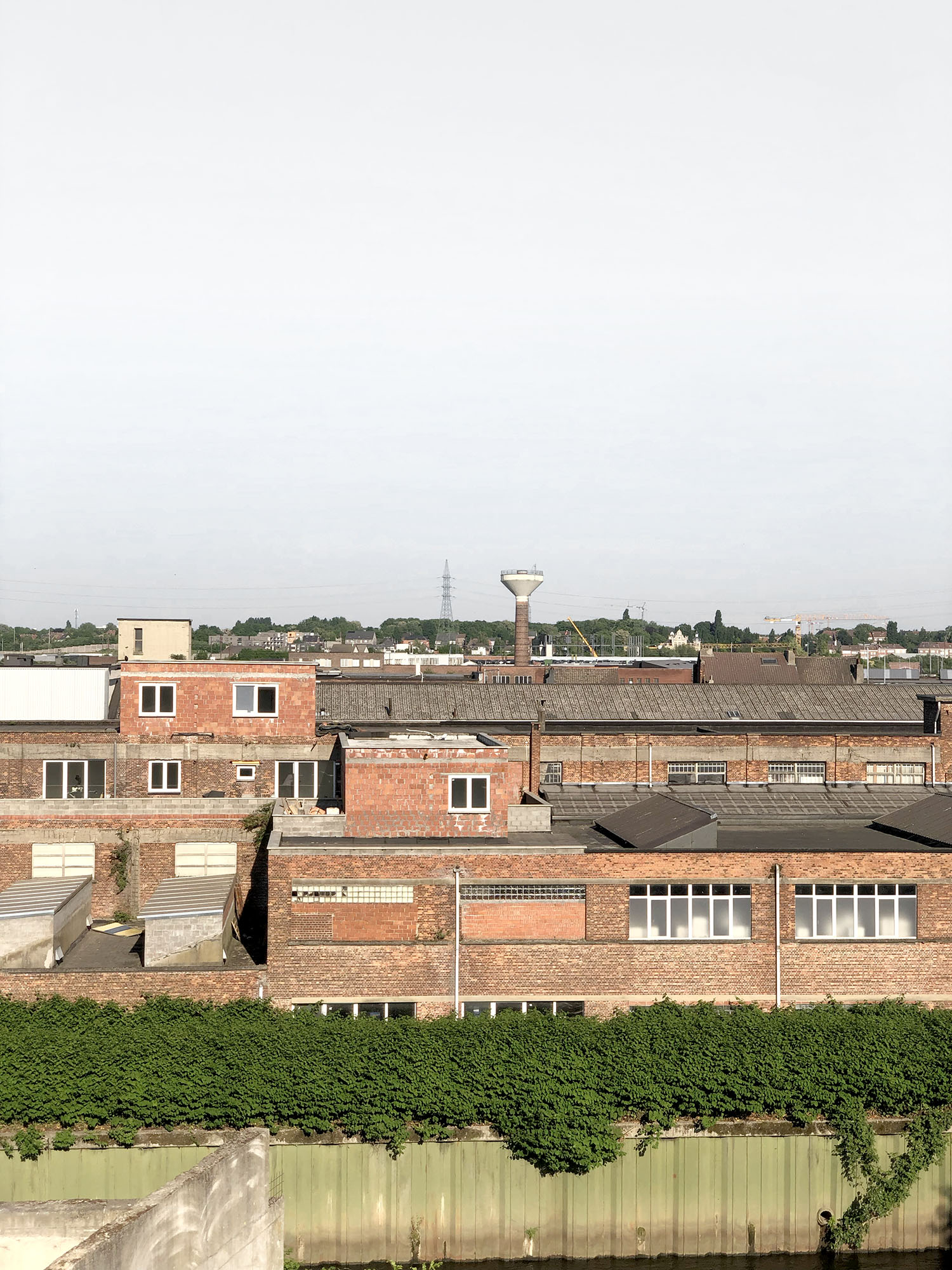
Inhabiting landscapes is a studio that invites to spend time in and react to the industrial landscape of Buda, situated on the border between Brussels, Vilvoorde and Machelen.Through collective research, it aims to give rise to a series of context-generated one-to-one scale installations.
1) Inhabitation as a research
Urban landscapes house a mixture of functions, activities, people and species that all found shelter in the area for their own reasons and in their own time. Ranging from the scale of a birds nest to a 1.3km long warehouse, these different entities inhabit the landscape. The scope of the studio will revolve around a series of questions and reflections about this inhabitation
(1) Which entities inhabit?
(2) How do these different entities inhabit?
(3) How do these entities live together?
(4) What is hospitable, hostile or invasive?
(5) Which entities can, or should maybe not, inhabit this space?
(6) Where do we find balance, where do we find friction?
(7) What can be improved?
*this list is non-exhaustive
Asking these questions allows us to reflect on how we can create an architecture that inhabits its surroundings without being invasive. “How do we set a proverbial foot in the landscape without trampling it? And what if it has already been trampled?” (Alicja Melzaka)
2) Inhabitation as a methodology
Throughout the semester we will alternate concentrated on-site work and reflective sessions on the campus.
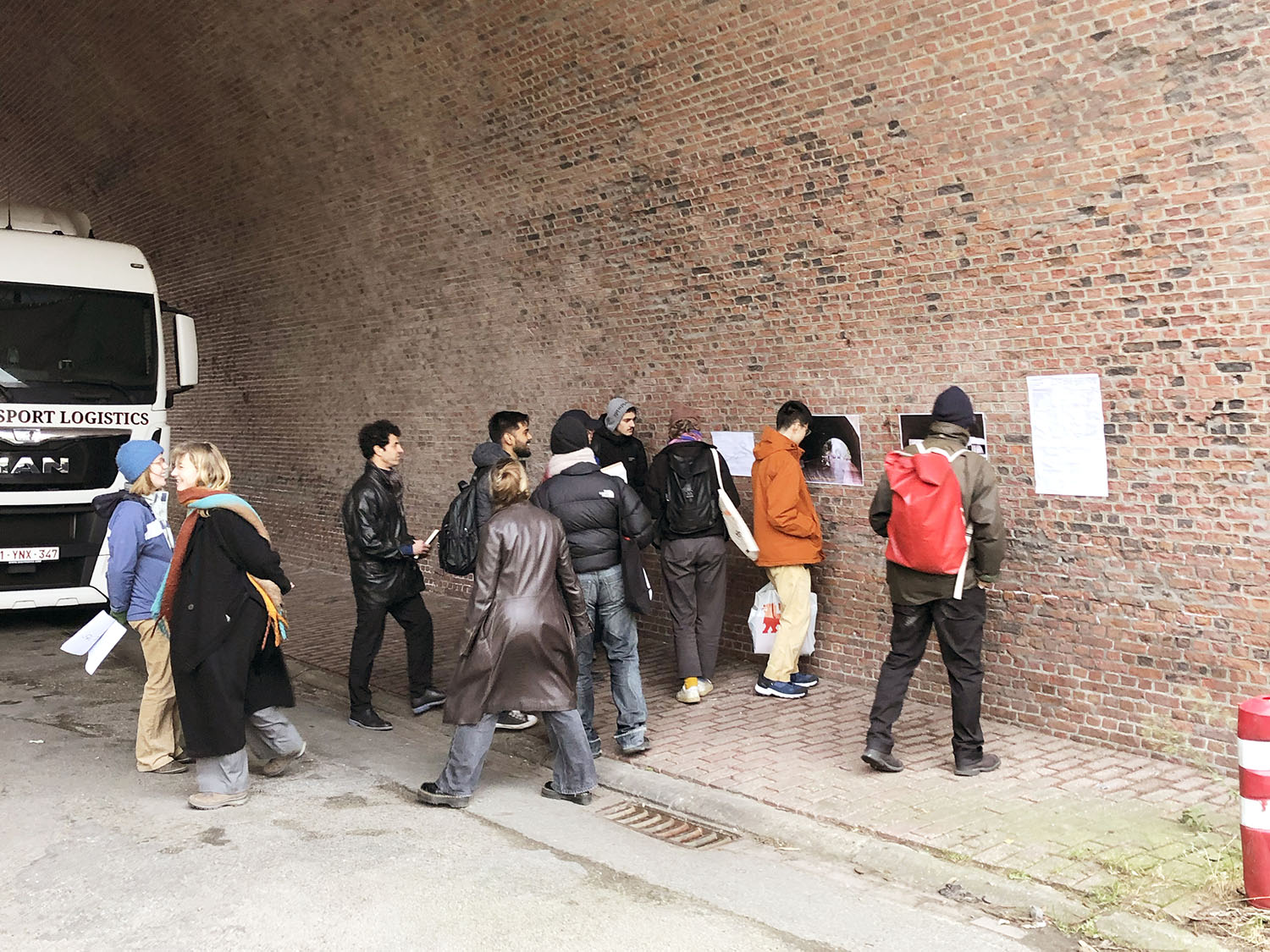
During fieldwork we will engage with this particular context through collective walks, interactions with those living and working there, participating in local activities, in order to understand and learn from the local beliefs, narratives, wishes and dreams. In the first phase of the studio this will allow us to create a collective body of knowledge. Connecting the small scale local energies to global relationships
In the second phase, our gaze shifts from observing to intervening: Reacting to what we learned we will formulate and construct a series of one-to-one scale interventions. Through on-site testing and peer reviewing we try to frame a context-generated answer to the questions we asked ourselves in the beginning of the semester.
3) Installation as medium
On-site installations function both as an end in itself and as a tool within our architectural research. Drawing inspiration from the unique, makeshift architectures and objects that Buda is littered with, we will create our own set of installations that react to the themes touched upon. By inserting these temporary elements into the landscape, we hope to open up moments of exchange with the area. In doing so, the installations become part of the environment — shaped by its dynamics, and at the same time, maybe, hopefully, reshaping it in subtle ways.
4) Buda
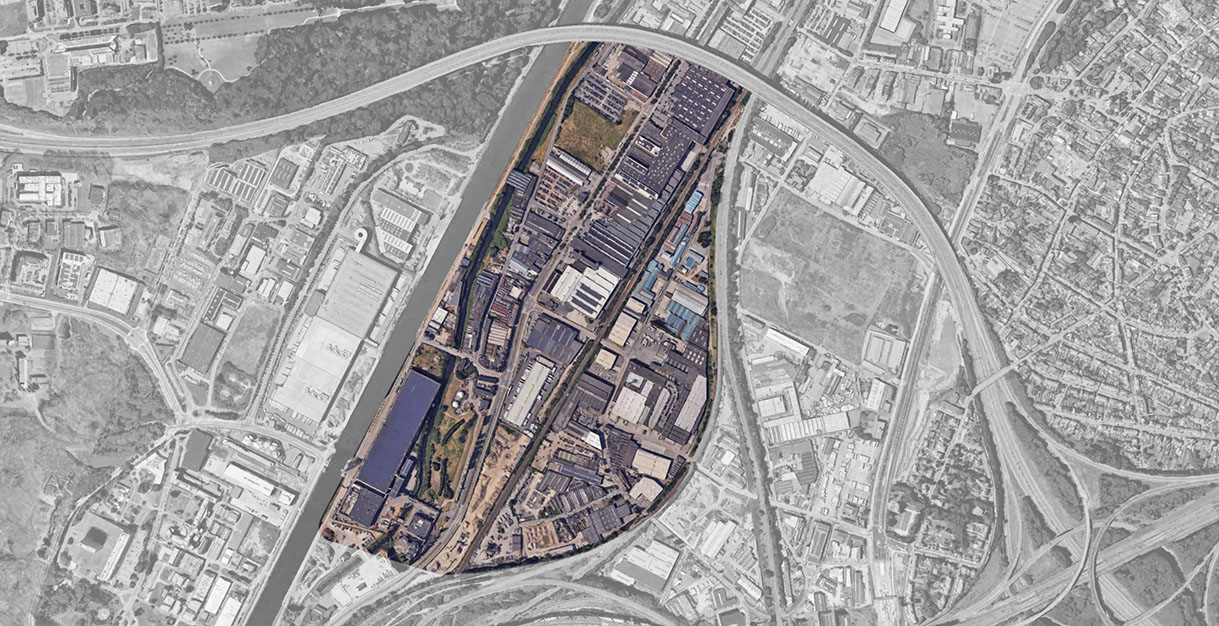
We will focus on the industrial area of Buda, situated on the border of Brussels, Machelen and Vilvoorde. It has long been a forgotten hinterland to the eyes of politics and urban planning. In recent years it reappeared in the picture with various perspectives and ambitions. Buda is a former productive hub with thriving working-class culture that currently houses logistics companies and activities at the edge of legality. This zone is currently in the gaze of a multitude of visions and ambitions:
On the one hand, at the supra-local level, the Buda+ master plan (2018) was outlined, which seeks to reconfigure the area into a progressive industrial zone dedicated to circular economy. In the meantime, several construction promoters from Vilvoorde and Machelen are nibbling at the edges of this area to develop it into a coveted residential neighborhood and Broeklin (former U-Place) wants to construct an enormous shopping mall. Since 2023, the Border Buda arts festival has been casting a critical eye on this blind spot with the intention of exploring the area artistically and turning it back into a meeting place from that point of view. The tensions and cracks that arise from these different perspectives form the breeding grounds of this studio.
Output
(1) Throughout the first half of the semester we will collectively construct a fieldworkers atlas: a body of knowledge that intends to document, understand and play with the diverse entities and forms of inhabitation of Buda and to research the relations they have to one another. It forms a starting point for discussions and interventions radiating from the studio space into its surroundings.
(2) In reaction to what we observed and analyzed, we will conceive and construct on an individual basis a one-to-one scale intervention in the public space.
References
Life in Buda – Borghese & Hacioglu (2015)
Of Hospitality – Derrida & Dufourmantelle (2000)
The Stranger As My Guest – Agier (2021)
Veldwerk I – Kunstenplatform Plan B (2021)
Veldwerk II – Kunstenplatform Plan B (2023)
The Undercommons – Moten & Harney (2013)
Le Paysage Ménagé – Maximiliaan Royakkers & Ciel Grommen
Météore – Maxime Brygo & Ciel Grommen
Metavilla – Exyzt
Siluroño – Collectif Dallas & Pool Is Cool
Border Buda arts festival
Saisons Zero
Floating University Berlin – Raumlabor
Asiat park – Onkruid
Kunst & Zwalm 2025