
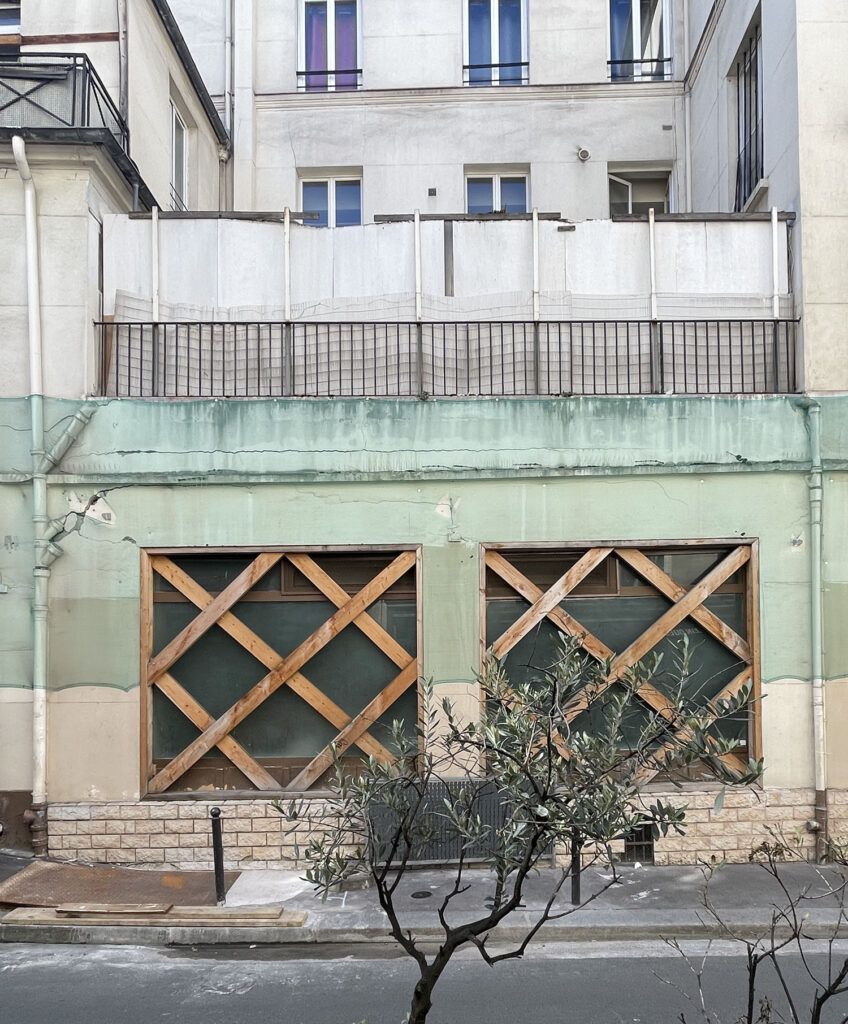
Façadism
Explore how façade design reveals the particularities of architectural practice today.
MARS3 · BRUSSEL · ENGLISH
teacher(s): Johan Nielsen
field of interest: Building Culture · Craft · Professional Practice · Materiality · Adaptive Reuse
attitude: Critical · Constructive · Experimental
method of inquiry: Observation · Translation · Research by Design
design media: Drawing-based · Material-based
learning environment: Individual trajectory · Live Project · Dialectic
study trip: No
Description
The student is invited to work either on an aspect of their Master’s Dissertation related to façades, on a case or position concerning façades that interests them, or on one of the “real cases” proposed by the studio. These “real cases” are drawn from the Cityforward portfolio (https://bma.brussels/en/cityforward/). The rules of reality apply here.
The façade is understood broadly as the interface between inside and outside, which can take many forms and express many nuances.
The methodology is based on individual work with each student to develop a conceptual framework and a fully detailed proposal for façade architecture. Constructional common sense and pragmatism form the basis of the position. Design intentions evolve through contact with materials, errors, and constraints. Form emerges from this constructive improvisation. Common sense and pragmatism can sometimes reveal where things become absurd and make a critical position possible.
Alongside individual sessions, collective sessions will provide conceptual input and opportunities for exchange. The relationship between design and document production is carefully considered. The studio begins with extremely simple documents that allow for conceptual flexibility, then moves towards highly detailed production once the position can support it.
Key questions
Can a façade take serious questions lightly without making light of them?
When does redrawing the entire project become the most reasonable decision?
What does a material know that the drawing does not?
Does the authority of real-world practice survive closer inspection?
Can an architect be taken seriously when a single design is supposed to resolve so many contradictions?
Position statement
Focusing on façade design is relevant because it is representative of many of the challenges architecture is expected to resolve: qualitative urbanity, capacity to foster social interaction, responses to climatic conditions, building performance, wellbeing, cost control, conceptual precision, sensitivity to heritage, alignment with current trends, administrative regulations, and supposedly communicated values. Through individual guidance, the studio invites each student to develop a simple, clear position that critically addresses these questions without being defined by them.
Learning outcomes
The student demonstrates critical insight into the different challenges at stake and develops a personal architectural position in response to their contradictions.
The student is able to formulate, test, and revise an individual research or design strategy when new findings or constraints challenge its initial assumptions.
The student demonstrates advanced knowledge and understanding of the structural, material, environmental, and constructional principles involved in façade design, and can translate them into a fully detailed proposal.
The student is able to employ design to mediate between fantasy and construction, architectural intention and material resistance, and stakeholders’ stated expectations and the student’s own implicit agenda.
The student is able to articulate the relationship between design and concept through a coherent set of architectural documents and a concise publication.
Expected deliverables
Architectural drawings · Model · Written reflection · Presentation;