
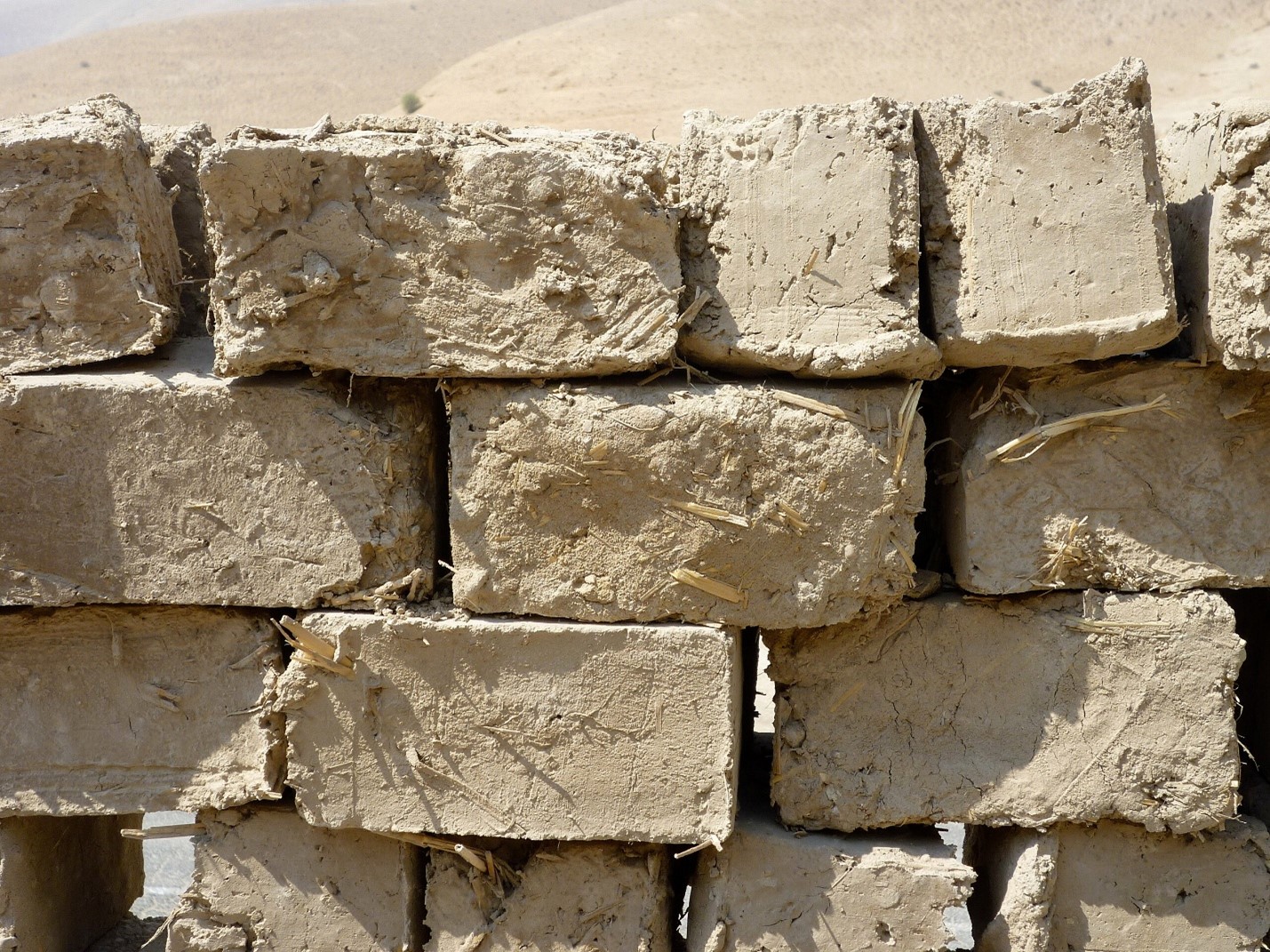
Con-Structure Matters: Crafting Clay
Master dissertation studio 2026-27
Supervisor(s): Laurens Luyten (supervisor) + Ignaas Back (co-supervisor)
Campus: Ghent
Language: EN
Max number of students: 8 (Limited by the number of funded students in the workshop)
Engaging Summary:
Matter plays an essential role in our experience of architectural design. More than that, the constructive, building physics, ecological impact, and structural properties of building materials are intrinsically part of the design process and the final quality of the architectural form.
In this studio, you will explore how architectural design can develop from a deep understanding of its building materials. The link between material properties and your personal generation of architectural design will be investigated in a self-chosen test-case design project.
You will learn to develop material-driven design, and to create and articulate your own architectural language and design strategies.
This year, the studio focuses on building with earth-based materials (unfired, cement-free and fully recyclable back into the earth), with clay as the primary binder, such as adobe, rammed earth, compressed earth blocks, wattle and daub, cob, and liquid earth.
You will learn about these materials through case-studies and literature review but also gain direct experience by making and building with earth-based materials in a one-week hands-on workshop in Trondheim, Norway (5-13 September 2026). This mandatory workshop links theoretical understanding with practical experience and is funded by the Erasmus+ project Crafting Clay.
To be successful in this studio, you need to have a solid understanding of materials, structural behavior, and general building technology.
Detailed Project Description:
In this studio, Con-Structure Matters: Crafting Clay, students explore how architectural form can emerge from a deep understanding of building materials. The focus is on how the constructive, building physics, and structural properties of materials influence design decisions. In this material-driven approach, students learn to develop their own architectural language and design strategies by reflecting on their design process.
This edition of the studio focuses on building with earth-based materials, with clay as the primary binder across a wide range of applications.
Each student is required to attend a mandatory workshop in Trondheim (Norway) from 5 to 13 September 2026. This hands-on workshop is funded for 8 students: the cost of accommodation, materials and tutoring at the workshop is covered, and up to 350 EUR in travel expenses is reimbursed. Only students who attend this workshop may enroll in this studio.
During this international workshop, held with students from Liechtenstein, the Netherlands, and Norway, various applications of earth-based constructions will be explored, with students building different types of earth walls.
(This studio is closely connected to the studio “Adapt, on Continuity in Building” by sharing studio topics, tutoring and reviews).
Linking Matter and Architecture
Matter is an important aspect of our experience of architectural design. Moreover, the constructive, building physics, and structural properties of building materials are intrinsically part of the design process and the final quality of the architectural form.
For example, stacked bricks, with their specific properties, can form load-bearing walls with acoustic, thermal, and aesthetic qualities. In addition, the structural compression properties of bricks and the principle of stacking incite the creation of arches and shells as architectural elements.
Similarly, wood consists of fibres that result in direction-dependent (anisotropic) properties of strength, deformation, shrinking, and swelling. This determines how wooden architecture is to be constructed and detailed.
This link between material properties on the one hand and form-finding and construction of architectural design on the other can be traced in many building materials, such as rammed earth, steel, bio-based materials, concrete, adobe, and bamboo.
In this studio, students investigate earth-based applications as a building material and develop a personal link between their material properties and the generation of architectural design. This link is explored through a test-case design project in which students have the autonomy to select their programme and context, and are encouraged to add personal themes (e.g., regenerative design, climate change, multicultural society, reuse, and social sustainability).
Studio context
This studio encourages students to develop and broadly explore their personal approach to designing.
To thrive in this studio, students (in addition to being an architectural designer) must possess a solid understanding of material properties, structural behaviour, and general building technology. This foundational understanding is crucial for conducting meaningful material investigations and pushing the boundaries of architectural design.
Semester 1: includes a mandatory workshop in Trondheim (Norway) from 5 to 13 September 2026, and five meetings with lectures, introduction, and start-up of the dissertation project. During this semester, students work in collaboration on the exploration of earth-based applications and their use as a building material in architectural design.
Semester 2: includes weekly to biweekly tutoring sessions (as needed) and three project reviews. Several online lectures will be provided on the topic of earth-based materials.
Expected output:
A manuscript (1) presenting the developed link between material properties and design generation. This work explains the developed design strategies of the student for creating earth-based architecture. In addition, at least one test-case design project (2) is presented with plans and details.
References/Further reading:
Addis, B., 2007. Building: 3000 Years of Design Engineering and Construction. London: Phaidon Press.
Arup, O., 1970. The Key Speech.
Balmond, C., 2002. Informal. Munich: Prestel.
Charleson, A., 2005. Structure as Architecture: A Source Book for Architects and Structural Engineers. Oxford, MA: Architectural Press.
Ching, F.D., Onouye, B.S., and Zuberbuhler, D., 2009. Building Structures Illustrated: Patterns, Systems, and Design. Hoboken: Wiley.
Conzett, J., 2006. Structure as Space: Engineering and Architecture in the Works of Jörg Conzett. London: AA Publications.
Deplazes, A., ed., 2005. Constructing Architecture: Materials, Processes, Structures. Basel: Birkhäuser.
Easton, D., 2007. The Rammed Earth House, Revised Edition. Chelsea Green Publishing.
Engel, H. and Rapson, R., 1967. Tragsysteme, Structure Systems. Stuttgart: Deutsche Verlags-Anstalt.
Gordon, J.E., 1978. Structures, or, Why things don’t fall down. London: Penguin Books.
Hunt, T., 2003. Tony Hunt’s Structures Notebook. 2nd ed. Oxford: Architectural Press.
Iorio, A. and Co, F.D., 2011. Jurg Conzett, Gianfranco Bronzini Patrick Gartmann: forme di strutture/ Forms of Structures. Bilingual edition. Milano: Mondadori Electa.
Kapfinger, O. and Sauer, M., 2015. Martin Rauch: Refined Earth: Construction & Design with Rammed Earth. DETAIL.
Luyten, L., 2022. Structure as (primary) generator of architectural design: a study of a master dissertation studio. Architecture, Structures and Construction, 2, 129–143.
Macaulay, D., 1981. Cathedral: The Story of Its Construction. Boston: Sandpiper.
Workshop: Adobe Brick – Research, New Design And Prospects For Use In Modern Construction – idaaf architects [online], 2025. Available from: https://idaafarchitects.com/en/workshop-adobe-brick-research-new-design-and-prospects-for-use-in-modern-construction/ [Accessed 24 May 2025].
Macdonald, A.J., 2001. Structure and Architecture. 2 edition. Oxford: Routledge.
McHenry, P.G., 1985. Adobe: Build It Yourself, Revised Edition. Tucson, Ariz: University of Arizona Press.
McHenry, P.G., 1989. Adobe and Rammed Earth Buildings: Design and Construction. University of Arizona Press.
Meister, U., Rist-Stadelmann, C., and Spaan, M., eds., 2019. Crafting the Façade: Stone, Brick, Wood. Zürich: Park Books.
Minke, G., 2006. Building with earth : design and technology of a sustainable architecture. Basel: Birkhauser.
Muttoni, A., 2011. The Art of Structures. Lausanne: EPFL Press.
Rael, R., 2009. Earth Architecture. New York: Princeton Architectural Press.
Rice, P., 1996. An Engineer Imagines. 2nd ed. London: Ellipsis.
Sandaker, B.N., 2008. On span and space: exploring structures in architecture. Abingdon: Routledge.
Sandaker, B.N., Eggen, A.P., and Cruvellier, M.R., 2011. The structural basis of architecture. 2nd ed. Oxon: Taylor & Francis.
Schodek, D.L. and Bechthold, M., 2014. Structures. 7th ed. New Jersey: Pearson Education.
Stedman, M. and Stedman, W., 2016. Adobe Architecture: A Simple Guide with Plans for Building with Earth. S.l.: Sunstone Press.
Strauven, I. and Ney, L., 2005. Ney & Partners Freedom of form finding. Antwerpen: Vlaams Architectuurinstituut.
Zalewski, W. and Allen, E., 1998. Shaping structures: statics. Wiley.
Links:
https://craterre.org/en/
https://eartharchitecture.org/
Image: https://commons.wikimedia.org/wiki/File:Mudbricks_in_Palestine_2011.jpg, copyright: Whiteghost.ink, CC BY-SA 3.0 <https://creativecommons.org/licenses/by-sa/3.0>, via Wikimedia Commons